Most juniors think their biggest problem is their technical level.
They’re convinced they’re missing a more impressive combo, a higher level of polish, or mastery of some new software to finally start getting replies.
Having worked with animators at all levels and assisted studios with recruitment, I’ve reached a different conclusion: that’s almost never where the problem lies.
A junior can spend hundreds of hours perfecting a walk cycle, acting details or a punchy attack. Very few spend an hour learning how to show that work to the right person, in the right way.
This gap leaves talented artists on the sidelines, wrongly convinced that they’re not cut out for this job.
The industry is in crisis, and the layoffs and studio closures feed the fear. But there is still work out there. New projects are starting, and things are shifting for studios and candidates alike. So how do you stand out when so many people are looking at the same time as you?
From Animation to Coaching: A Shift in Perspective
The animator’s job has changed radically. When I started my first job in 2008, the title “gameplay animator” didn’t even exist yet in job listings. In 2014, when I applied for the last time as an employee, it was still very rare.
I spent 17 years in studios before going independent and creating AniMotion in 2025. For a long time, I only saw one side of the equation: the production teams’ side.
When I decided to take the leap, I had to analyze the market in depth again, because it had changed so much. The change keeps accelerating, and we’ve been going through a deep crisis for the past two or three years.
What strikes me most in today’s job listings is how precise they are compared to before. Small indie studios still need “jack-of-all-trades” profiles who can move between several skills, but overall the trend has narrowed around very specific needs.
In my field, searches have become surgical: a Technical Animator with 5 years of Unreal experience, a Gameplay Animator who specializes in combat, or a Cinematic Animator who’s an expert in motion capture.
More broadly, this applies to every profession: recruiters are looking for an exact answer to an immediate need.
Today, my days are split between consulting for studios, training and coaching animators. This position lets me observe both sides of the fence at all times: on one side, I talk daily with recruiters, leads and studio directors; on the other, I coach professionals already in a job, juniors and career changers looking for their next challenge.
When I talk with animators, the same questions come up again and again:
“Is my portfolio good enough?”
“Should I learn a new software?”
“When will I finally be ready to apply?”
Meanwhile, the leads and recruiters I work with ask me much more direct questions:
On specialization: “Can he do what we need on this project, or will we have to teach him everything?”
On clarity: “Can you help me look at this reel? I couldn’t tell what he actually did or what his real skills are.” (When a profile lacks focus, studios struggle to picture the candidate on their project.)
On visibility and network: “Is there anyone on the team who’s already worked with him, or someone we can ask for feedback on his work?”
On the human side: “Will communication with this person be smooth and constructive when it comes to feedback and production iterations?”
That’s where the gap becomes obvious. Level matters, but most candidates put the bulk of their energy into variables that, in the end, have very little impact on a studio’s final decision.
Technical Level vs. Visibility
When I ask a student or a junior to describe their job search strategy, the answer often sounds like this: a slightly all-over-the-place demo reel, an up-to-date PDF résumé, applications sent in bulk. Then the waiting, hoping the quality of the work will do the rest.
It’s what we’ve been taught all our lives: work hard, improve, be good. Nobody teaches us the next part.
Of course, hiring depends on plenty of factors we can’t control: production timing, a studio’s art style, the chemistry with the team. But if you isolate what a candidate can actually steer, the problem often comes down to where technical level and visibility intersect:
Level
Low visibility
Visible
Very strong level
Hidden talent
Opportunities
Developing level
Invisible
Fast progress
Invisible (developing level / low visibility): From what I see, this is where most candidates are. They send lots of applications, get almost no replies, and conclude that they need to go back to working alone for another six months. Sometimes that’s the right call. But most of the time, the problem isn’t technique.
Hidden talent (very strong level / low visibility): Highly skilled artists who simply can’t be found: no online presence, no network, a blurry profile. Studios can’t hire them for the simple reason that they don’t know they exist.
Fast progress (developing level / visible): People whose work is still maturing, but who know how to show what they do, share their work, listen to feedback and engage with the community. They unlock opportunities much faster and improve at lightning speed through contact with professionals.
Opportunities (very strong level / visible): The ideal zone. Your work and skills are so clear that studios or your contacts come directly to you.
From reacting to having a strategy
To get out of the “Invisible” zone, it’s not about adding a 10th shot to your demo reel. It’s about structuring your approach. I break it down into 4 essential pillars:
A targeted reel: A punchy showcase, stripped of anything superfluous, that answers a studio’s immediate need instead of trying to show everything you’re capable of.
A clear profile: The ability to make what you offer obvious. A recruiter should quickly understand what your core craft is and what you bring to the team.
Visibility: Making your work findable where leads and recruiters actually look day to day.
A network of trust: Building long-term relationships of trust with peers, former colleagues and professionals, well before you need a job.
Stories From the Field
Here are five situations that helped me understand all this.
Your level doesn’t speak for itself
“Quality always pays off in the end” is a comforting myth.
I regularly come across both extremes: average-level animators who are never short of work because they’re visible and connected, and exceptional talents nobody can find.
I often think of a senior animator I worked with. Very solid, very reliable, able to handle anything, from keyframe to mocap. He often said: “If someone offers me something better elsewhere, I’m gone.” But he had no online profile, no portfolio, and wasn’t looking anywhere. How could a studio have known he existed? His skills were beyond reproach. His visibility was nonexistent.
I’m not criticizing anyone here. It’s simply how the mechanics work: a recruiter can’t contact someone they don’t know exists.
A demo reel is a communication tool
The mistake I see most often: wanting to show everything, for fear of missing an opportunity.
A student recently reached out to me, at a loss: no replies at all to his applications. His reel mixed gameplay animation, rigging and cinematics. I asked him a question: “Put yourself in the recruiter’s seat for 30 seconds. You receive 100 applications today. You can choose between a generalist who can do a bit of everything, and a very focused profile who shows exactly what your project needs. Who do you pick?”
That was what made it click for him.
A demo reel isn’t there to tell the story of everything you’ve done in the last three years. It has to answer a specific need, and fast. I once had someone cut 1 minute 30 from a 2 minute 40 reel where you got bored after 45 seconds. We went through every shot: what does it prove? Is it redundant? What was left was a clear 1 minute 10 reel where every second defended a skill.
A reel answers a job offer
This is something I’ve been able to observe firsthand from the inside, by taking part in hiring.
A case where everything worked: For a gameplay animator position, we received the reel of a candidate who ticked almost every box in the listing, which is rare. He had already worked on similar projects and put forward exactly the skills we were looking for: mocap cleanup, a realistic project, gameplay integration. It wasn’t perfect. But everything he showed sent signals in the right direction. And that held up: no surprises once he was hired, a smooth integration, and a guy the whole team loved working with from start to finish.
A case where it couldn’t work: For a senior position, again in gameplay animation, a candidate sent us a reel with film, series, rigging and acting. His animation level was very solid, but there was nothing on video games. A senior animator coming from film or series often has an impressive level of acting and polish. But for a senior gameplay position, that’s not the first thing we’re looking for. What we need is someone who already masters real-time constraints, engine integration and root motion, without having to re-explain the technical basics of games. When you hire a senior, you need them to be immediately operational on those issues. This candidate was a very good animator, just not the one the job listing described.
Understanding that a reel exists to get you hired is essential. The goal isn’t to rebuild your reel from scratch for every application, but to adapt the work you already have, sorting and ordering it, so the recruiter immediately understands that you’re the right person for this position.
A network isn’t built the day you start looking for a job
Throughout my career in studios, I never had to actively “network.” I did my job, and I naturally built relationships with my colleagues. Yet that’s exactly how I landed at Ubisoft: through a contact of a contact.
When I went independent, I understood something essential: building a network isn’t about collecting thousands of anonymous LinkedIn connections the day you find yourself unemployed. It’s about cultivating relationships of trust day after day, over the long term.
The strength of long-term relationships: To give just a few concrete examples:
When I started publishing in-depth articles on my blog, it put me in touch with a studio. A year and a half later, they still give me regular assignments.
A former colleague reaches out roughly every two years, whenever a position opens at his studio. I stayed 11 years as an employee at Ubisoft and was never able to accept his offers. But the contact has never been broken: we know how the other works, and the door always stays open.
Likewise, a former colleague I’d lost touch with for over 10 years contacted me when I launched AniMotion to offer me a project. Even after a decade without speaking, the initial trust was still intact. I wasn’t available, so I pointed him toward other talented profiles. Our relationship is stronger for it, and maybe in the future we’ll have the chance to work together again.
When you send an unsolicited application in the middle of 150 others, you’re a PDF file in a pile. When you’re recommended by a contact you have a genuine relationship with, you’re an identified, trusted profile before the job is even posted.
Studios hire a colleague
When a studio opens a position, it receives applications in bulk within hours, many of them completely off target. Often without the time to sort through everything internally, some ask me to step in and pre-select.
The question that comes up with leads isn’t only: “Can he animate?” It’s also: “What is this person like day to day?” Are they reliable? Can they communicate? How do they react to feedback?
Animation is teamwork, tied to code, design, rigging and integration. If communication grinds, the whole chain slows down. And I’ve seen hires based solely on an impressive level end in integration difficulties. Many studios prefer someone slightly less experienced technically, but reliable, communicative and ready to learn their tools.
Changing Mindset
A mid-level animator I’ve been coaching for a few sessions has started to change his trajectory. He began with a loss of confidence, stuck because of the lack of replies and the difficulty of finding assignments. But taking action, step by step, changed everything: instead of constantly seeking validation of his level from others, he redirected his energy toward actions that have a real impact.
He understood the spirit of it: targeting, pruning, and focusing solely on his gameplay skills. He’s growing his network intelligently without asking for work. Instead, he asks for feedback on his animations and engages naturally with the studios he likes. His reel is now on its third version, and it’s ten times more relevant than the first.
There’s still work to do; it’s a continuous, iterative process. The next challenge is to help him polish how it’s presented: a carefully crafted presentation, making sure his reel stays punchy and well-paced, and highlights the right aspects depending on the studios he’s targeting. He won’t rebuild a full reel for every job offer. He has his toolbox (his best shots), and he simply varies the order or the focus depending on the type of studio he’s aiming at.
I don’t know yet where all this will lead him. But I can clearly see the shift: he’s stopped endlessly asking himself whether he’s “good enough,” and started asking the only question that matters: “Who needs to see my work, and what do they need to see in it?”
If I Were a Junior Today
Here’s the roadmap I’d follow:
1 – Produce:
Create 2 or 3 shots that directly reflect the studio you’re aiming at. Look at their previous games, study what they do, and produce something relevant and directly related. When they see your reel, they should understand right away that you’re operational for their projects.
2 – Lock & Publish:
Cut. Ruthlessly remove average or repetitive shots. Aim for 1 min to 1 min 30 maximum. A finished, clear reel is worth more than a “perfect” one that never goes out. Take care of the presentation too: your reel is the first thing people see of you.
3 – Align your positioning:
Make your LinkedIn and your portfolio consistent. Clearly display your specialty (Gameplay Animator – Combat / Locomotion). Leave no doubt about what you’re looking for.
4 – Seek targeted feedback:
Don’t ask for work. Reach out to working professionals or leads and ask for specific feedback on 1 or 2 shots from your reel. Most will be happy to help.
5 – Build real connections:
Start conversations with people whose work you admire. Comment on their breakdowns, ask relevant questions about their workflow. Position yourself as a curious, passionate future colleague, not as someone desperately looking for a job.
And then, for every application: reread the job listing, and adjust your reel with what you already have in stock.
Conclusion
When a lead calls me to pre-select profiles, he’s not looking for the flaw. He has dozens of applications to read, a production moving forward, often very little time. What he hopes, every time he opens a reel, is to land on the right person, the one who’ll save him from restarting a search in three months. He wants you to be the right candidate. He just needs you to make it obvious.
That changes how we can look at everything above. Targeting your reel, clarifying your profile, nurturing a network: that’s not putting on a show. It’s making things easier for someone who is looking for exactly what you know how to do.
It’s also what makes a lack of replies so hard to read. It doesn’t say you don’t belong in this profession. It says that, for this job, other applications answered the need more clearly or were better spotted. That’s hard to hear, but it’s good information: everything that makes up that gap, the reel, the profile, the network, can be worked on, and often way faster than technical level.
So if you could only do one thing this week: show the beginning of your reel to someone in the industry, and ask them what position they imagine for you. If the answer matches what you’re aiming for, you’re already on the right track. If not, you’ve just saved yourself months.
In our field, the challenge isn’t just becoming good.
The challenge is letting the right people discover that you’re good.
About Vanessa RUFFRA
Gameplay animator since 2008, working across all aspects of gameplay animation.
After 17 years at Quantic Dream and Ubisoft, I founded AniMotion to support studios and train the next generation of gameplay animators : consulting, coaching, training and educational content.
My goal: to share a clear, professional and sustainable approach to gameplay animation.
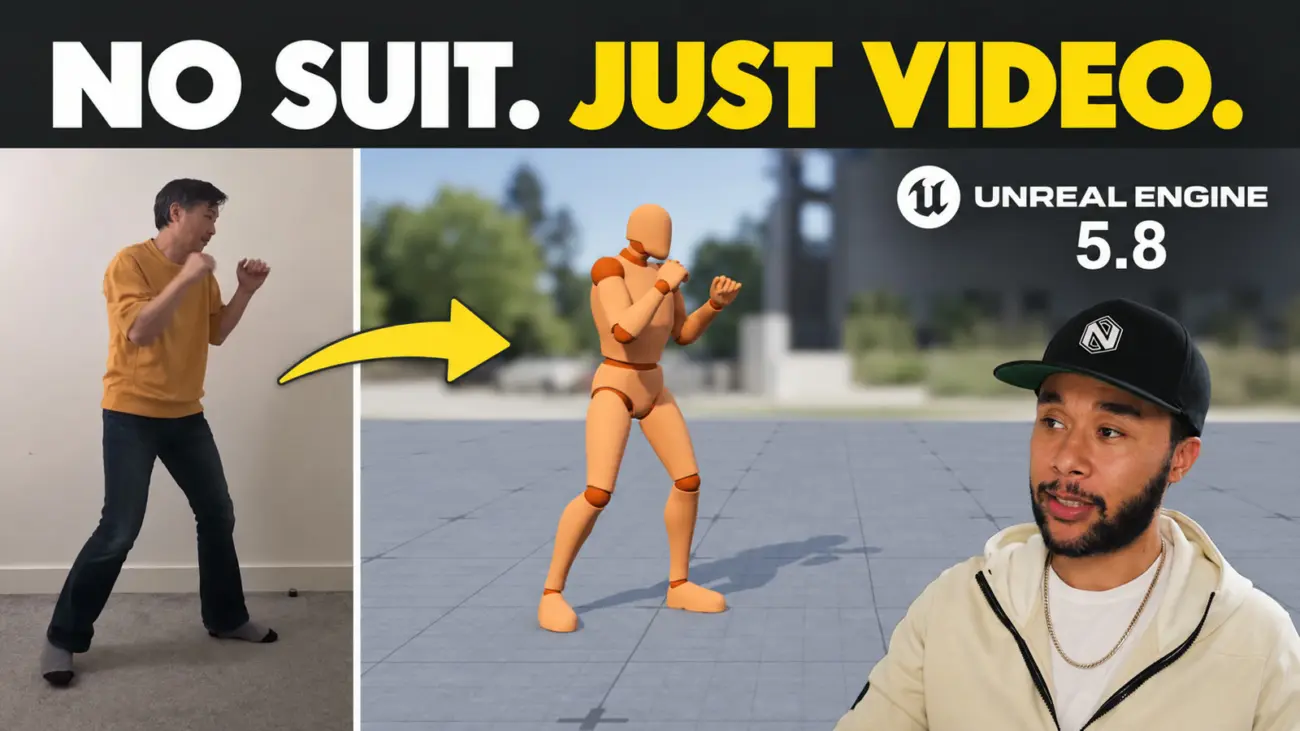
Alex Moon and I captured a two-hit combo from one phone clip, cleaned it in Control Rig and fired it in gameplay with MetaHuman Animator in Unreal Engine 5.8. The free plugin, the honest verdict, and his files to download.
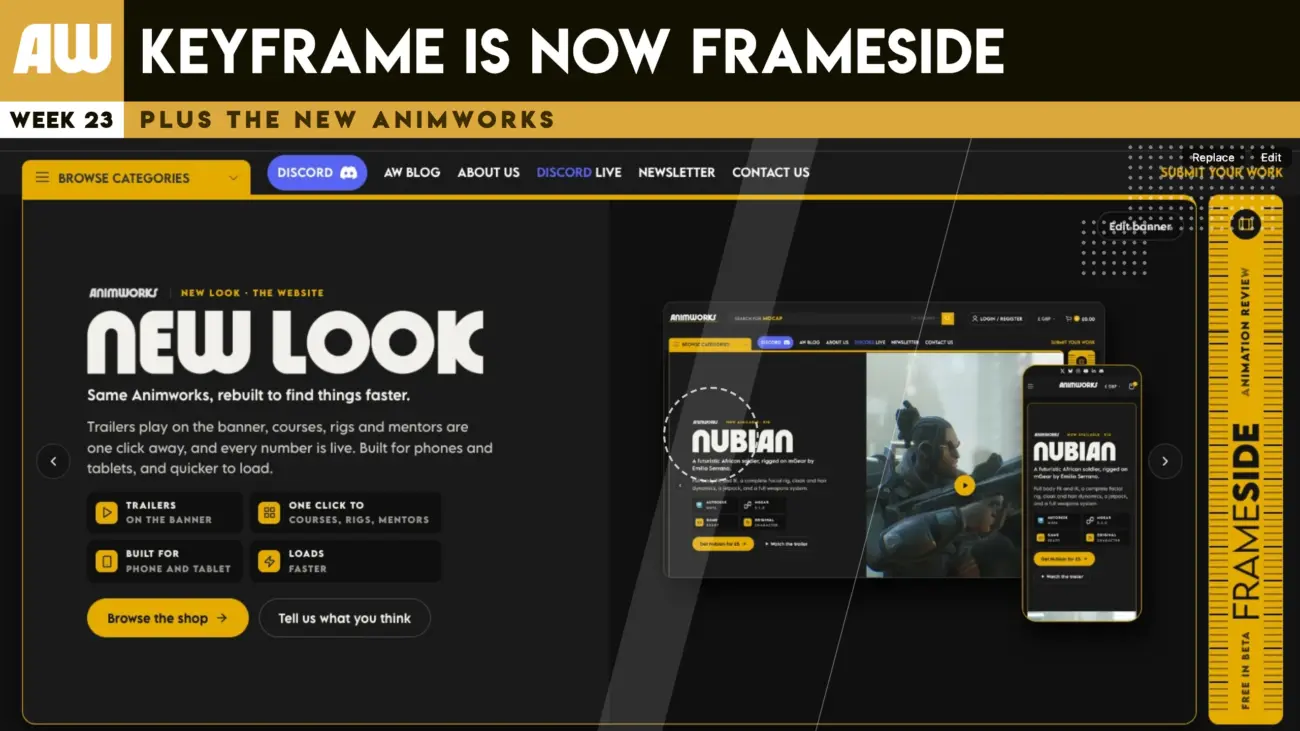
Keyframe is now FrameSide. Why we renamed our free animation review tool, and a tour of the rebuilt Animworks homepage: live numbers, three doors, real best sellers, and a page for studios.