













A career carried by movement
I was taught how to animate.
I was taught how to observe, how to understand movement, how to feel the rhythm of an action.
I was taught principles, curves, key poses.
But no one taught me the rest.
How to last in a passion-driven career without losing yourself. How to recognize what truly nourishes you before trying everything.
How to navigate engines, teams, decisions, compromises. How to set boundaries when you love what you do too much to stop.
Those things, I learned by moving forward. By getting it wrong. By starting over. Like many others.
Seventeen years in studios, projects that shaped me, extraordinary teams, innovations I’m proud of, challenges I don’t regret.
And along the way, one thing became clear: I wanted to pass on what experience slowly reveals.
Today, I guide and train animators. It’s where I stand now, a place that makes sense with my path.
The craft keeps evolving, and so do I.
This article is a journey through the field: what you only discover over time, what you sometimes understand too late, what you wish you had heard earlier.
It’s also why AnimWorks became the place where I wanted to share this perspective.

The Door That Opened
I didn’t want to work in video games.
When I graduated from animation school in 2007, I wanted to work in film.
That’s what I had been trained for: building a story, shaping characters, creating a storyboard, playing with camera shots, conveying intention, observing movement.
And at the time, video games had a bad reputation when it came to animation quality.
So I sent hundreds of applications to film studios, advertising studios, and game studios.
I had been told that the first job would be hard to get, that I would have to accept whatever came my way. I wanted to give myself every chance.
I received two replies to my applications. One rejection. And one from Quantic Dream.
My only internship had been in video games, in a small studio where I was both an intern and the “lead animator.” A tiny team, a lot of improvisation.
But I had already learned something essential there: you can learn a lot in imperfect conditions, as long as you stay curious.
I hadn’t chosen video games. But it was the door that opened.
A few weeks later, I started my career in a job that didn’t even have a name yet.
“Gameplay animator” didn’t exist. An animator was just an animator, and everything else you learned on the job.
What I understood that day is simple: we rarely start where we thought we would.
Careers don’t follow our plans. And sometimes, that’s exactly what we needed.
Learning to Do Things Well
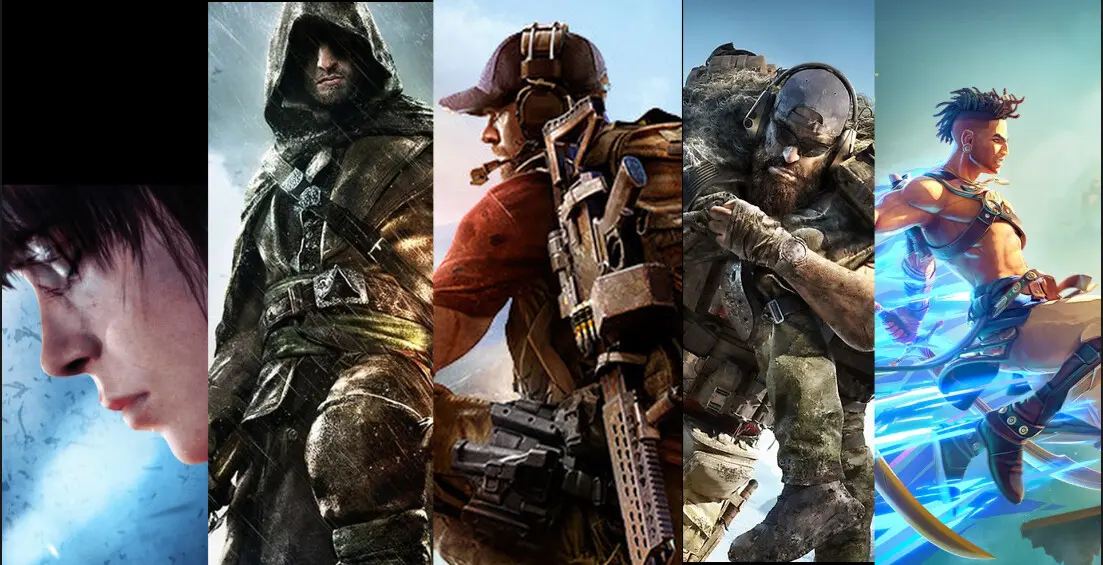
In 2008, I arrived at Quantic to work on Heavy Rain.
We were six juniors on temporary contracts, with only two permanent positions at stake.
The atmosphere had something particular about it: we helped each other because we were a team, but everyone knew they were fighting for their place.
A silent tension that many juniors know well.
During the first week, my lead didn’t ask us to animate.
He asked us to read the game’s script. To understand the universe, the characters, the intentions. Simply to understand what we were about to serve before figuring out how to do it.
With another lead, we might have started by producing quickly, producing a lot, without asking questions. He taught us to think before executing.
Only then did he show us his method: how to approach motion capture, add a layer, handle root motion, build a loop that doesn’t show, organize files so they survive production.
It wasn’t a list of techniques. It was a way of thinking about the work, structuring it, making it reliable. He wanted to build an autonomous team he could truly delegate to.
It was also where I discovered what I really loved: gameplay.
Systems, building blocks that fit together, the logic behind movement. He saw it before I did, and he guided me in that direction.
First the motion kits, the blends, the extra rigor required in a system where every mistake echoes everywhere.
In 2010, I shipped Heavy Rain. My first game. A pride I won’t forget anytime soon.
Then, during the inter‑project period, he gave me time. Real time.
Free rein to explore different engines (Unreal, Morpheme, Unity, etc.). I searched, experimented, prototyped, started over.
And I eventually proposed our animation graph architecture for Beyond Two Souls, in collaboration with the gameplay programmers.
I was twenty‑five, and I had become lead of the gameplay animation team.
A good lead doesn’t just teach techniques.
He creates the conditions for you to find your place and grow in it.
Not everyone gets that chance.
And it’s probably the most precious thing you can receive at the beginning of your career.
But those years also confronted me with a reality I wasn’t expecting.
What my résumé doesn’t say is what I lived alongside it. Because those experiences shaped the way I work just as much as the projects did.
When I started, I was young, passionate, and entering a very male‑dominated environment.
And like many women in that context, I had to learn very quickly to deal with situations that had nothing to do with the job: inappropriate attitudes, comments you brush off with a smile, behaviors you minimize because you want to move forward, because you want to prove yourself, because you think it’s part of the landscape.
I’m telling it because it’s the silent reality of many women, in every sector, not just video games.
And because those experiences taught me something essential: if you don’t set your boundaries, someone else will decide where they are.
What Passion Can Do to Someone
The production of Beyond Two Souls was exhausting, and I loved it.
It matters to say both. The team was tight, the challenges were exciting, and that period made me grow faster than any other.
And it was true: we had all put something of ourselves into it.
We stayed late, we came back on weekends, we couldn’t disconnect anymore.
Little by little, an idea settled in: being passionate meant being available. Always. For everything.
Even on the day of my grandmother’s funeral, I sent emails to the team.
It’s not something I’m proud of. But at the time, I didn’t even see the problem.
I had internalized that it was normal. That this was what loving your job looked like.
I was managing mocap shooting, the gameplay team, meetings with game designers and programmers, production spreadsheets, graph architecture, all while still animating myself.
For more than two years.
And I really loved it. That’s exactly the trap.
Burnout doesn’t warn you. It arrives when you’ve already given everything for a long time, and you don’t notice because each day, taken on its own, seems normal.
When I decided to leave, they offered to lighten my workload. Only then did I understand the scale of what I had been carrying.
In animation, we talk about overlap: that natural delay that keeps a movement from stopping abruptly. The body continues, the hair follows, the clothes trail behind.
In a career, burnout works the same way. It’s already in motion long before you see it coming.
When you deeply love what you do, no one needs to push you. You burn yourself out on your own.
And no one teaches you how to protect yourself from it.
What a Prestigious CV Doesn’t Tell You
After leaving Quantic, I took a year off. To find myself again, to rest, to move, to try something different: drawing, photography, painting.
Anything but animation. I needed distance to understand what I still wanted, and what I no longer did.
In 2014, when I arrived in Montpellier, I interviewed at Ubisoft. I was available, grounded again, and curious to see how to write the next chapter.
The position was in cinematics. It wasn’t my plan, I wanted to do gameplay, but it was the door that opened. So I stepped in.
The team was incredible. A lead who had built something rare: a small dedicated structure, talented people, kind, committed.
Three Assassin’s Creed titles on the CV. Projects you’re proud to mention.
And yet.
Spending three weeks on the same cinematic.
Animating fingers, facial expressions, micro‑movements.
Hearing the same dialogue loops in my head as I fell asleep.
I felt suffocated because it simply wasn’t what I loved doing.
In cinematics, you live in the detail: a finger, an eyebrow, a shift in the eyes, weeks on the same scene.
In gameplay, you live in the system: short animations, the logic that connects them, a global feeling evaluated in motion.
They are two jobs that use the same tools, but they engage different brains.
I understood that I wasn’t a “detail” animator, but a “system” animator.
What I love isn’t animation itself as much as what you build around it. Systems. Pipelines. The logic that holds the pieces together.
A prestigious CV doesn’t say any of that.
It doesn’t say whether you fell asleep happy or exhausted.
It doesn’t say whether you found your place or simply held on.
And behind these silent trajectories, there is another topic we often avoid: money.
In this industry, we don’t talk about it much.
It took me almost a year to realize I was being paid less than my male colleagues in the same role, and five years to gradually get my salary revalued, step by step, by learning to clearly express what I brought and what I expected in return.
Those moments taught me to exist in ways other than through passion or performance: to take my place, not just earn it.
To understand that respect isn’t gained by working more, but by positioning yourself better. This is what I do. This is what I bring. This is what I want. Simply, clearly.
And it was precisely at that moment that I asked to join the gameplay team, with those questions of place and value still fresh.
I hoped to find the same momentum I had at Quantic.
What I found was more complex: multi‑studio pipelines, decisions that went up but didn’t come back down, proposals that got lost in layers of validation.
I realized I didn’t really have influence over what mattered. I was executing.
Little by little, I set new boundaries: no more overtime. No more working on Wednesdays once my daughter was born.
Each one was a conscious decision, never an obvious one.
And each one taught me the same thing: no one will take you where you want to go if you don’t ask for it.
Rekindling the Fire
I asked to switch projects at the end of Ghost Recon Breakpoint, which allowed me to explore several paths (projects that never shipped) before finding Prince of Persia: The Lost Crown.
A small team, passionate senior developers carrying the project, an agility I hadn’t experienced since Quantic.
And keyframe animation again, after so many years of mocap.
Prince of Persia brought back my creative spark.
Taking control of every frame, building movement from scratch, working on a small scale with experienced and passionate people, pushing things so the game truly feels good to play, that is what I deeply love about this craft.
One week after I arrived, lockdown stopped everything. Everyone at home.
And I discovered that I could work differently. That people trusted me to manage my time. That I delivered.
And that my life as a solo mom finally stopped being a constant race I had to handle in the margins.
Five years on this project. Great years, I had a blast.
But over time, something wore thin. Working alone for so long, I gradually lost that sense of belonging.
I did my job, and I did it well, but I was no longer the one who questioned things, who proposed ideas, who experimented.
I could feel the passion slipping away again.
And without that inner fire, I lose my sense of purpose.
So when, at the end of the project, I was asked to go back to animating on a war game, even though I had been clear that I wouldn’t do that anymore, I knew I had to leave.
Some boundaries hold.
Others reveal the next direction
A Shift in Perspective
After Ubisoft, I really took time to think. Not just about what I would do next, but about what I truly wanted.
I considered leaving everything behind. Becoming a botanist. An animal behaviorist.
Jobs with no connection to animation, but that all had something in common with what I was searching for without yet knowing how to name it:
something alive, something concrete, something meaningful.
I did a career assessment. And it highlighted something I was no longer sure of: I still loved my craft.
What I was no longer aligned with was the framework, the structure, the constraints, the impossibility of taking things all the way.
Three values stood out clearly: autonomy, stimulation, universalism.
Autonomy, because I need the freedom to think, to organize my work, to set my boundaries without having to justify being human.
Stimulation, because novelty, exploration and movement are at the core of how I learn.
And universalism, because I need my work to contribute to something larger than myself: to transmit, to elevate the craft, to participate in practices that are fairer and more human.
Three paths emerged from that assessment: training, coaching, consulting for studios.
Directions to explore.
I started writing to keep a trace of what I had learned in studios. A blog, articles about gameplay animation, reflections I had accumulated over twenty years.
And the first responses came in. Animators thanking me, telling me it shed light on aspects of gameplay for which few resources exist.
Questions, conversations, requests for mentorship.
For a long time, I had noticed that every project started from the same place: the same foundations to lay, the same questions to clarify, the same problems to solve.
Everyone moved forward in their own way, without any real structured framework, and each team rediscovered what others already knew.
Those messages confirmed it wasn’t just a feeling. There was a real gap. And I could help fill it.
At the same time, I completed my training as an adult educator, an idea I’d had from the beginning.
Learning how to structure knowledge, not just share it.
Understanding how adults learn, how you build progression, how you create the conditions for something to truly take root.
Several people reached out to me to create training programs. Everything was falling into place naturally.
This is what I’m doing today, without pretending it’s what I’ll always do.
My business is a space for exploration, with ideas taking shape and others still waiting to find theirs.
Getting to know yourself professionally doesn’t happen in a day.
Sometimes it takes a detour, a crisis, the feeling of having lost everything to understand what you truly want to keep.
And sometimes the direction doesn’t reveal itself all at once, it builds through attempts, through resonance, through what others reflect back to us from what we bring to them.
AnimWorks, The Place Where Bridges Exist
Animation is expanding in every direction : film, VFX, video games, independent creation.
Tools are increasingly accessible, and resources have never been more abundant.
But knowing where to look, what to follow, and what is truly reliable or grounded in professional practice remains difficult. We often move forward by assembling fragments, connecting ideas gathered from everywhere, without a clear framework.
AnimWorks fits naturally into this reality: a place where resources are gathered, organized, and validated by professionals.
A space designed to offer clear guidance when you need it.
It’s what I lacked when I started, and it’s a real opportunity for the new generations.
What drew me here is that AnimWorks doesn’t reduce animation to a single angle.
It’s not purely technical, nor purely theoretical, nor purely artistic, it’s a space where all these dimensions coexist and enrich one another. A place where tools, rigs, resources, and experiences meet.
Where a production question can illuminate a gesture, where an exercise can reveal a system, where a single resource can unlock understanding, whether you’re working on a film, a game, a series, or your own project.
What I hope to bring here is a way of connecting things: what we learn, what we experience in production, what we come to understand over time. Not definitive answers, but angles, connections, ways to contextualize the craft.
Animation has never been more vibrant, but the market itself has changed.
These are difficult times for finding stable work: productions are more fragmented, teams shift quickly, contracts are shorter. Everything moves fast.
That’s precisely why this space matters, a place to build something more solid, more shared, for those just arriving and for those looking to go further.
Because if there’s one thing twenty years of exploration have taught me, it’s that what we learn never stays exactly as it is. Skills evolve, experience reshapes them, and each step builds on the last.
That’s the nature of this craft and it’s what I want to share here, in every article, every resource, every exchange.
Conclusion
I’ve had the chance to work on extraordinary projects, with teams who taught me, challenged me, and sometimes pushed me hard.
I’ve shipped games I’m proud of. I’ve built systems that didn’t exist before. I’ve learned to set boundaries, to understand myself, to leave when I needed to.
I started my own company, created training programs, and began sharing what no one had shared with me.
And I’m not done exploring. My career is far from over.
This craft doesn’t leave much choice, you have to adapt, reinvent yourself, accept that what you know today will be questioned tomorrow.
It’s not a threat. It’s a constant invitation to stay curious, to rethink things, to never let yourself be confined to what you already master.
What I’m laying down here is a thread: a way to pass on what helped me move forward, to connect pieces that, for me, eventually made sense.
It’s not a method, not a truth. Just a contribution.
And if an idea, a sentence, or an example here helps you progress, even a little, then that already means a lot.
AnimWorks is part of that movement. A place where animators from all backgrounds can learn differently, connect what they know to what they don’t yet understand, and move forward, at their own pace, in their own way.
What I’m sharing here is simply what twenty years of exploration have taught me so far.
The rest, we’ll discover together.
Related posts
All the Open Roles in the Animation Industry in One Place – StudioWatch!

Animation jobs are scattered everywhere. So we built StudioWatch
In the current state of the industry, more and more artists are loo...
Artist Highlight: Laura Lico (Moss : Book II)
/* Hallmark · component: in-post callout (after ruixen banner-newsletter, rebuilt plain CSS) · genre: editorial · theme: Animwo...
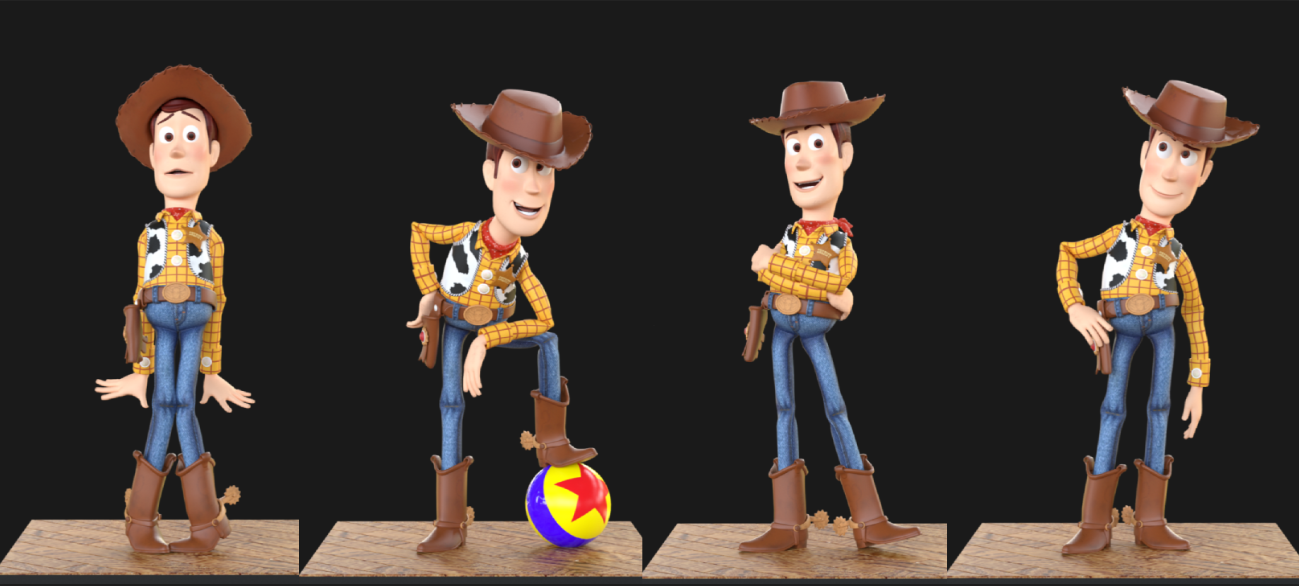
What You Can Learn From… Woody ! Reading Silhouette Like a Pro
Five poses from Toy Story, broken down shot by shot, and how to rebuild each one on the free Woody rig for Maya.
Art of the Hold
Keeping Stillness AliveThere's a moment in animation that trips up a lot of people, and it's not a complex breakdance or a tricky overl...
SKILL BOOSTER: Mastering your silhouette
Silhouette is the first language of animation. A pro game animator breaks down line of action, weight, negative space and the workflow behind poses that read instantly.
Long Productions
Pacing Yourself (and Your Team) Across a Long Production
Every production has a version of the same idea: that the real pressure is at ...
Tight Deadlines
Surviving Tight DeadlinesEvery animator eventually meets the schedule that doesn't care how good your work is, only how fast it ships. ...
Rigging and Animation
Rigging and Animation: a SymbiosisOn a production, the animation department is going to spend a meaningful amount of time interacting w...
Using Reference
Using Reference Footage Well
At some point someone probably told you to shoot reference. A mentor, an instructor, a tutorial, or a di...
Timing & Spacing
Timing and Spacing in Animation: Why Spacing Is So Important
Every animation textbook pairs them together. Spacing and timing....
Procedural Animation
There's a moment every game animator knows. You've just finished a beautiful walk cycle. The foot plants are perfect, the weight reads ...
Secondary Animation
The Subtle Art of Secondary AnimationThere are moments in animation that audiences rarely notice consciously, yet we can really feel. A...